Your wife makes every decision. You avoid conflict at all costs. You have opinions but never voice them. You're physically present but emotionally checked out. And somewhere deep down, you know something is wrong.
You're not lazy. You're not weak. You're passive. And that passivity is destroying your marriage, distancing your children, and hollowing you out from the inside.
I've spent over 35,000 clinical hours working with passive men and the marriages they're losing. I've seen this pattern hundreds of times. The good news is that passivity isn't a life sentence. It's a pattern that developed for reasons, and patterns can be broken.
This guide covers everything you need to understand passivity, recognize it in yourself, and build a concrete plan to reclaim your leadership. This isn't theory. This is a roadmap.
What This Guide Covers
Part 1: What Passivity Actually Is
Let's clear up what passivity is not. Passivity is not introversion. Plenty of introverted men lead their families with quiet strength. Passivity is not being easygoing. Flexibility is a virtue. Passivity is not servant leadership. Serving your family requires active engagement. And passivity is not "picking your battles." That phrase has become the passive man's favorite excuse for never fighting any battle at all.
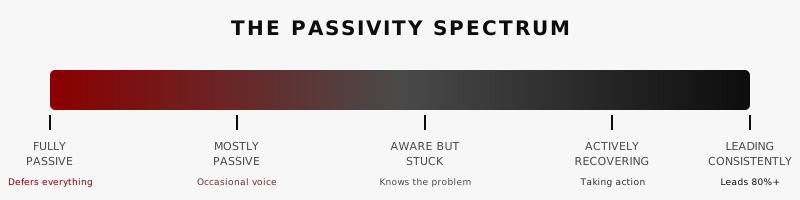
So what is passivity? Passivity is the abdication of responsibility disguised as flexibility. It's conflict avoidance at the expense of truth. It's deferring decisions to avoid accountability. It's emotional absence while being physically present.
The passive man doesn't rock the boat. He doesn't voice disagreement. He doesn't initiate. He waits to be told what to do, then resents being told what to do. He has opinions but swallows them. He has needs but never states them. He has a vision for his life but never acts on it.
This pattern started in the Garden. Adam stood silent while Eve was deceived. He was right there. Genesis 3:6 tells us he was "with her." He said nothing. He did nothing. He watched it happen. The first act of male passivity recorded in scripture, and we've been repeating it ever since. Read more about this in Adam's Silence: The First Act of Male Passivity.
A domesticated man is a passive man. He's been trained to stay in his corner, not cause problems, and let others run the show. He trades his authority for the illusion of peace. But it's not peace. It's surrender.
Part 2: How Men Become Passive
Nobody wakes up one day and decides to be passive. This pattern develops over years, sometimes decades. Understanding how you got here is the first step to finding your way out.
Childhood Roots
Many passive men grew up with a domineering mother and an absent or passive father. They learned early that assertiveness gets punished. Speaking up means conflict. Having needs means being a burden. The safest strategy was invisibility.
Other men grew up in chaos. Addiction, volatility, unpredictability. In that environment, being small and quiet kept you safe. The problem is that survival strategy followed you into adulthood, long after the danger passed.
If you never saw healthy masculine leadership modeled, how would you know what it looks like? A domesticated man IS fatherlessness, whether your father was physically absent or just emotionally checked out.
Cultural Conditioning
Modern culture hasn't helped. "Happy wife, happy life" teaches men that their job is to keep her pleased at all costs. Masculinity gets labeled toxic. Leadership gets reframed as control. Assertiveness becomes aggression. Strength becomes oppression.
The Nice Guy Syndrome runs deep. You learned to be agreeable, accommodating, conflict averse. You learned that good men don't cause problems. You learned that your needs come last, if they matter at all.
Relationship Dynamics
In the early days of your marriage, your wife probably asked your opinion. She sought your input. She waited for you to step up. But you deferred. "Whatever you want." "I don't care." "You decide."
She made the call because you wouldn't. Over time, she stopped asking. Why wait for input that never comes? She adapted to your passivity by becoming the decision maker. Now the pattern is deeply set. She's been leading so long she doesn't know how to stop. And frankly, she's not sure you're capable of taking it back. I explain this dynamic fully in When Your Wife Takes Over (Because You Wouldn't).
The Fear Underneath
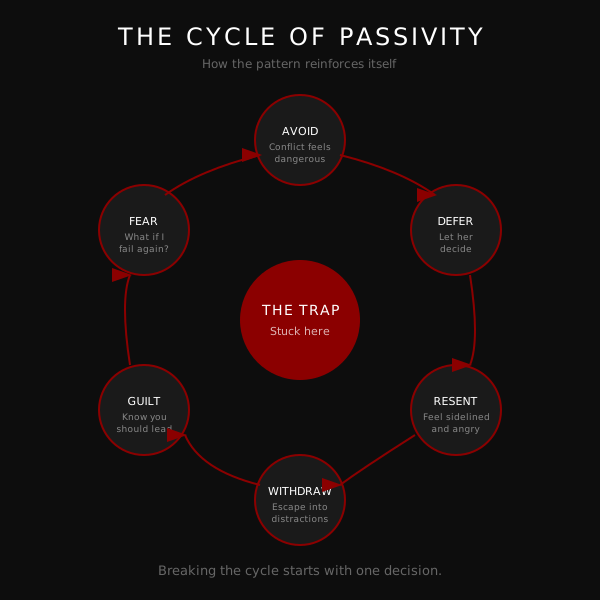
At the root of passivity is fear. Fear of conflict. Fear of rejection. Fear of failure. Fear of being seen as controlling or demanding. Fear that if you assert yourself, you'll lose her.
The irony is brutal: the passivity you use to avoid losing her is exactly what's pushing her away. The fear behind your passivity is a lie that keeps you stuck.
Part 3: The 10 Signs You've Become Passive
Self awareness is where change begins. Here are the signs that passivity has taken root in your life. Be honest with yourself as you read through these.
Sign 1: "I Don't Care" Is Your Default
Where should we eat? "I don't care." What movie should we watch? "Whatever you want." What do you think about this decision? "I'm fine with anything." You've said these phrases so many times they're automatic. But you do care. You've just learned it's easier not to say so.
Sign 2: You Avoid Hard Conversations Until They Explode
There's something bothering you, but you don't bring it up. You tell yourself you're keeping the peace. Then it festers. Then it explodes, often over something small. Your wife is blindsided because she had no idea anything was wrong.
Sign 3: You Have Opinions But Don't Voice Them
You know what you think. You just don't say it. Maybe you're afraid of conflict. Maybe you assume your opinion doesn't matter. Maybe you've been shut down so many times you stopped trying. Whatever the reason, your voice has gone silent.
Sign 4: Your Wife Makes All Major Decisions
Finances. Parenting. Social calendar. Vacations. She's running all of it. Not because she's controlling, but because someone has to. You handed her the reins by refusing to pick them up.
Sign 5: You Say Yes When You Mean No
You agree to things you don't want to do. You commit to obligations that drain you. You say yes to keep the peace, then feel resentful about the commitment you made. Your word has become worthless because it doesn't reflect your truth.
Sign 6: You Don't Know What You Actually Want
If I asked you right now what you want for your life, your marriage, your career, could you tell me? Many passive men have suppressed their desires for so long they've lost access to them. They genuinely don't know what they want anymore.
Sign 7: You Escape Instead of Engaging
Video games. Endless scrolling. Working late. The garage. The golf course. You've found refuges where no one asks anything of you. These escapes aren't the problem. Using them to avoid your life is.
Sign 8: You Apologize Constantly
Sorry for having an opinion. Sorry for being in the way. Sorry for existing. You apologize reflexively, even when you did nothing wrong. It's a way of making yourself small, preemptively defusing conflict that might not even happen.
Sign 9: You Feel Like a Roommate, Not a Husband
You share a house but not a life. You coordinate logistics but don't connect. The romance is gone. The partnership has become a business arrangement. You live parallel lives under the same roof.
Sign 10: Your Kids Don't Come to You
When they need advice, they go to Mom. When they need permission, they go to Mom. When they need comfort, they go to Mom. They've learned that Dad isn't really in the game. You're present but not available.
If you recognized yourself in five or more of these signs, passivity has become your default operating system. Read the full breakdown in 7 Signs You've Become a Passive Man.
Part 4: What Passivity Costs You
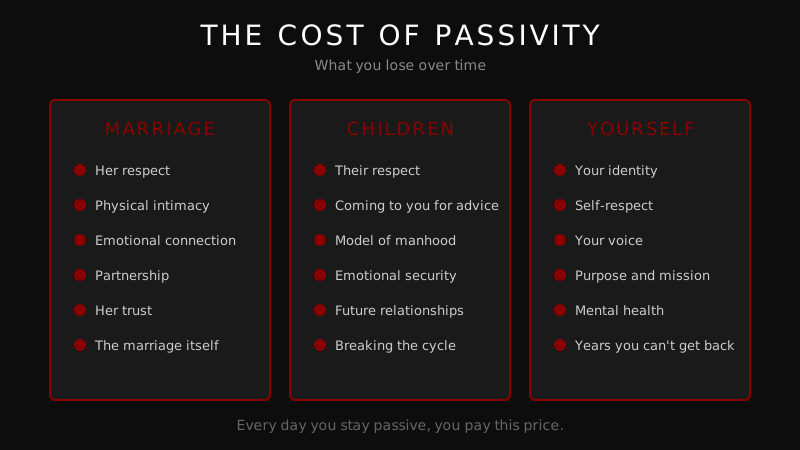
Passivity feels safe, but it extracts a brutal price. Let me show you what it's actually costing you.
Your Marriage
She loses respect. Your wife can't respect a man who won't lead. She might love you. She might be committed to you. But respect requires something to respect. When you defer every decision and avoid every conflict, there's nothing for her to admire.
Intimacy dies. Desire requires polarity. There has to be masculine and feminine energy creating tension and attraction. When you become passive, you neutralize that polarity. You become her roommate, her co-parent, her assistant. Not her man. This is why she stopped initiating.
She becomes exhausted. Someone has to lead the family. When you won't, she must. She's carrying the mental load, making every decision, running every system. She's exhausted. And she resents that she has to do your job on top of her own. I explain this fully in Decision Fatigue: Why Your Wife Is Exhausted.
Resentment builds. She resents carrying everything alone. You resent being sidelined. Both of you are stuck in a dynamic neither of you consciously chose. This is how passivity destroys marriage.
Your Children
Your sons learn passivity is normal. They're watching you. They're learning what a man looks like, how a husband acts, what marriage is. You're teaching them that men defer, avoid, and disappear. They'll carry this into their own marriages.
Your daughters learn to expect nothing from men. They're learning what to expect from a husband. If you're passive, they'll either accept passive men as normal or resent men entirely. Either way, you've shaped their future relationships. I cover this in Raising Daughters to Expect More from Men.
The effects of a passive father on children echo for generations. This isn't just about you anymore.
Yourself
Identity erosion. When you never assert yourself, you lose yourself. You become defined by what others want, what others expect, what others need. The man you were meant to be disappears under layers of accommodation.
Suppressed anger. Passive men aren't peaceful. They're suppressed. All that unvoiced disagreement, all those swallowed needs, they don't disappear. They build pressure. Then they leak out sideways: sarcasm, withdrawal, explosive outbursts over small things. Read more in Anger: The Passive Man's Shadow.
Depression. Many passive men are depressed and don't know it. They call it being tired, being stressed, being checked out. But when you suppress your desires, your voice, and your agency long enough, depression is the natural result.
Part 5: The Biblical Framework for Masculine Leadership
Christian men often struggle with leadership because they've been given a distorted picture of what scripture actually teaches. Let me clear that up.
What Scripture Actually Says
Ephesians 5 gets quoted constantly, usually out of context. Yes, wives are called to submit. But read the whole passage. Husbands are called to love their wives "as Christ loved the church and gave himself up for her." That's not a call to domination. It's a call to sacrificial leadership.
Headship means responsibility, not privilege. It means you go first into the hard things. It means you lay down your life, your comfort, your preferences for the good of your family. It's the opposite of passivity, but it's also the opposite of tyranny.
The call is to lead without controlling. To serve without abdicating. To be strong and gentle. To protect without smothering.
Jesus as the Model
Jesus was gentle with the broken and fierce with the corrupt. He served His disciples by washing their feet, but He also flipped tables in the temple. He didn't avoid conflict when truth was at stake. He spoke hard words when hard words were needed.
He made decisions. He initiated. He led. He protected. And He did it all while remaining fully loving, fully present, fully engaged.
The passive man has confused gentleness with weakness. Jesus shows us they're not the same. True biblical manhood requires both strength and tenderness.
The Lie of Spiritual Passivity
Some men hide their passivity behind spiritual language. "She's more spiritual than me." "I let her lead the devotions because she's better at it." "I don't want to impose my views."
This is spiritual passivity, and it's still passivity. God called you to lead your family spiritually. That doesn't mean you have to be a Bible scholar or a preacher. It means you take responsibility for the spiritual direction of your home. You initiate prayer. You set the tone. You don't delegate your calling to your wife and call it humility. More on this in Spiritual Leadership in Marriage.
Part 6: The Recovery Roadmap
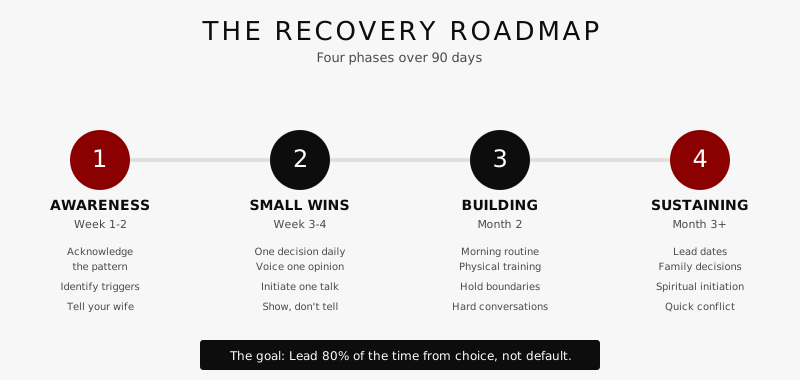
Understanding passivity is step one. Now let's talk about what to actually do about it. This roadmap takes you through four phases over approximately three months. Some men move faster, some slower. The point is progress, not perfection.
Phase 1: Awareness (Week 1 and 2)
Acknowledge the pattern without shame. You're not a bad man. You're a man who developed a coping strategy that no longer serves you. Name it. Own it. That's not weakness; that's the beginning of strength.
Identify your specific passive behaviors. Where do you defer? When do you go silent? What triggers your retreat into avoidance? Get specific. Write it down.
Understand your origin story. Where did this pattern come from? Childhood? Past relationships? Cultural messaging? Understanding the roots helps you pull them up.
Tell your wife you're working on this. Not a grand announcement. Not a promise you might not keep. Just a simple statement: "I've realized I've been passive, and I'm working on changing that." Then stop talking and start doing.
Phase 2: Small Wins (Week 3 and 4)
Make one decision daily without deferring. Where to eat. What to watch. What time to leave. Small stakes. Just practice deciding.
Voice one opinion you'd normally swallow. Doesn't have to be controversial. Just has to be real. "I'd actually prefer the Italian place." "I don't love that idea." Start using your voice again.
Initiate one conversation you'd normally avoid. Something you've been putting off. Something that makes you uncomfortable. Have it.
Don't announce your changes. Demonstrate them. The temptation is to tell everyone you're changing. Resist it. Just change. Let the actions speak.
Phase 3: Building Capacity (Month 2)
Establish a morning routine. You lead yourself before you lead anyone else. Wake up with intention. Exercise, pray, plan. Your body and your leadership are connected.
Physical training. This isn't about vanity. A man who can't lead his body can't lead his family. Start moving. Get stronger. The discipline transfers.
Practice holding boundaries. Say no to something. Disappoint someone who expects you to comply. Survive the discomfort. Boundaries for men who never learned them start here.
Have the hard conversation you've been avoiding. You know the one. The thing that's been sitting in the back of your mind for months. Address it. Not aggressively. Directly.
Phase 4: Sustained Leadership (Month 3 and Beyond)
Plan a date without asking "what do you want to do." Decide. Make reservations. Handle logistics. Lead the evening.
Lead a family decision from start to finish. Something meaningful. A vacation. A purchase. A change. Research it. Propose it. See it through.
Initiate spiritually. Pray with your wife. Pray with your kids. Whatever fits your faith. Just initiate.
Address conflict within 24 hours. When something bothers you, don't let it fester. Bring it up while it's small. This is how you stop apologizing and start changing.
The 80% Rule
You don't have to lead everything. That's not the goal. The goal is to lead most of the time and follow some of the time, from a place of choice rather than default.
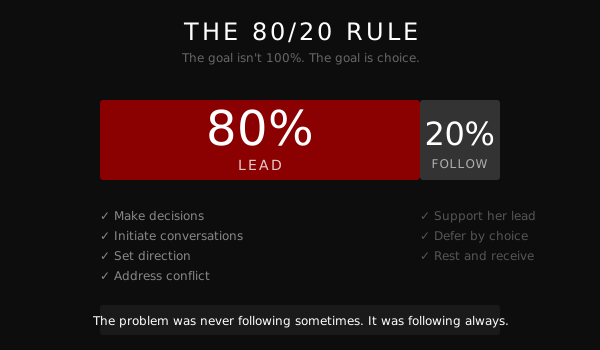
Lead 80%. Follow 20%. The problem was never that you followed sometimes. The problem was that you followed always. You went from passenger to... nothing. Time to go from passenger to pilot.
For a detailed daily breakdown, read The First 30 Days: Starting Your Recovery from Passivity.
Part 7: Common Obstacles and How to Handle Them
Change isn't linear. You will hit obstacles. Here's how to handle the most common ones.
"My Wife Won't Let Me Lead"
I hear this constantly. Here's the truth: she adapted to your absence. For years, she filled the vacuum you created. She can't just hand over control to someone she doesn't trust to handle it.
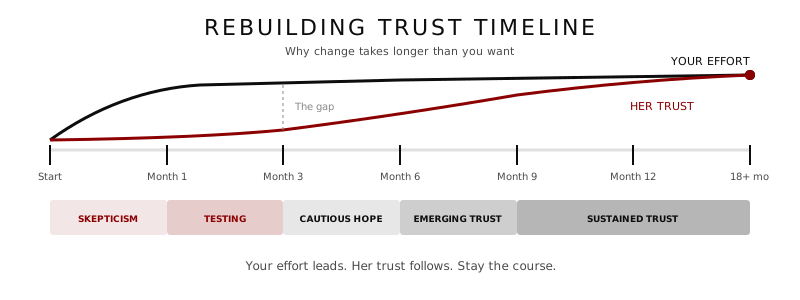
This isn't about her giving you permission. It's about you proving yourself trustworthy. Start small. Be consistent. It takes six to twelve months of reliable action before she'll trust your leadership again. Rebuilding trust after passivity takes time.
"She Tests My Changes"
Of course she does. She's seen temporary efforts before. She's watched you get motivated, make promises, then slip back into passivity. She's testing whether this time is different.
Testing isn't sabotage. It's verification. Don't get angry about it. Don't take it personally. Just stay the course. When you pass the tests, trust builds.
"I Tried and It Didn't Work"
One hard conversation isn't change. One week of initiative isn't transformation. You're fighting years of ingrained pattern. Relapse is part of recovery.
When you slip back into passivity (and you will), don't spiral into shame. Note what triggered it. Get back on track. The man who keeps getting up is the man who eventually wins.
"What If I Swing Too Far Into Control?"
Passive men worry about this constantly. "What if I become a tyrant?" Here's the reality: it almost never happens. Passive men who start leading typically overcorrect toward center, not toward domination.
If you're worried about becoming controlling, you won't. That worry itself is the safeguard. The men who become tyrants aren't worried about it at all.
For more on navigating this, read 5 Excuses Passive Men Make (And Why They're Lies).
Part 8: When You Need Help
Some men can work through this with self reflection and intentional practice. Others need support. There's no shame in needing help. There's only shame in refusing it when you do.
Signs You Need More Than Self Help
Trauma that needs professional processing. If your passivity roots in abuse, neglect, or significant trauma, reading articles won't be enough. You need someone to help you process what happened.
Marriage in crisis. If she's talking about divorce, if trust is shattered, if the damage is severe, you need intensive intervention. Individual work matters, but the marriage needs direct attention too.
You've tried and can't break through alone. Some patterns are too deep to untangle by yourself. Having someone who can see your blind spots and hold you accountable makes the difference.
Depression or anxiety underneath. If you're dealing with mental health challenges alongside the passivity, address both. One affects the other.
What Help Looks Like
Individual coaching. Not therapy focused on your childhood, but action focused work on building the man you want to become. Someone who will challenge you, not just validate you.
Men's group. Iron sharpens iron. You need men around you who are fighting the same battles. Men who will call you out when you're making excuses. Men who will encourage you when you're doing the work. Read why men need other men.
Marriage intensive. If the marriage is in crisis, a few hours of weekly counseling won't cut it. You need concentrated time to reset the foundation.
Find Out Where You Stand
Take the free assessment to identify your specific patterns of passivity and get a clear starting point for change.
Take the Free AssessmentThe Choice in Front of You
You've read this far. That tells me something. You know something needs to change. The question is whether you'll actually do something about it.
The cost of staying passive is higher than the cost of change. Every day you stay passive, you lose ground. Your wife trusts you less. Your kids learn the wrong lessons. You disappear further into a version of yourself you don't recognize.
You didn't become passive overnight. You won't fix it overnight. But every day you take action is a day you reclaim ground. Every decision you make is a step back toward the man you're supposed to be.
The lion rises when he decides to. Not when circumstances are perfect. Not when everyone supports him. Not when it's comfortable. He rises because it's time.
It's time.
Find your mission. Reclaim your leadership. Stop bowing to fear, to comfort, to the path of least resistance.
Lions don't bow. Remember who you are.
Ready to Take the Next Step?
Book a free discovery call. Let's talk about where you are, where you want to be, and how to get there.
Book a Discovery Call